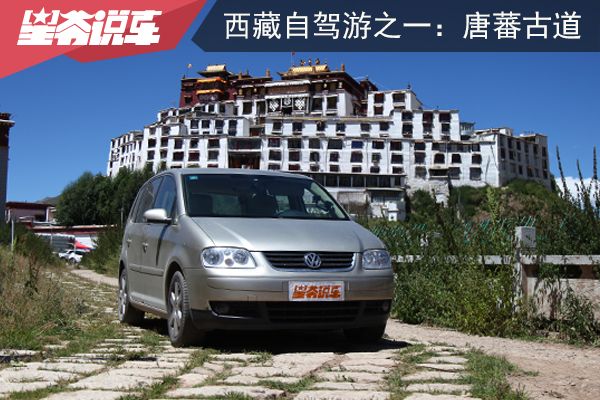
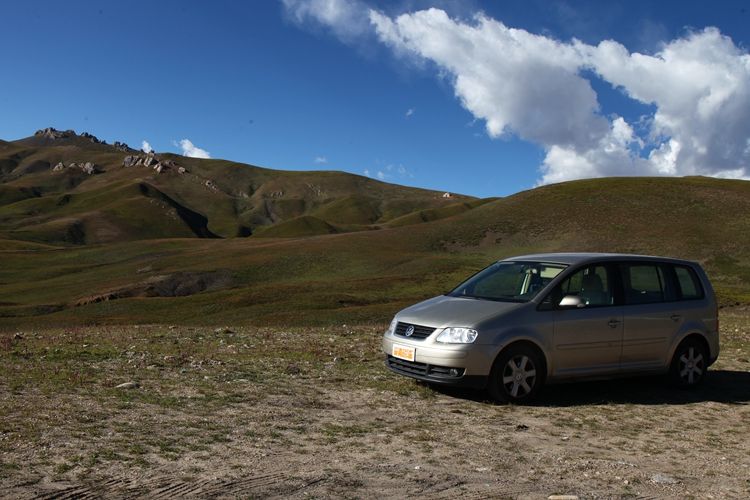
[Chexun. com] In August and September of 2024, I drove my family’s Touran from Beijing to Xizang. This is my 18th visit to Tibet, and this Touran was purchased in May 2006, and this year is just its 18th year. During the trip, there were three impressive experiences. The first one was to walk the ancient Tang-Fan Road completely, the second one was to pass through the Laqiong Pass at an altitude of 5,830 meters, and the third one was to walk the second new Tibetan highway that was opened to traffic last year with half a tank of oil. After returning to Beijing, I will record these three experiences with three travel notes and share them with you. What you are seeing now is the first article, which is about going to Lhasa along the ancient Tang-Fan Road.
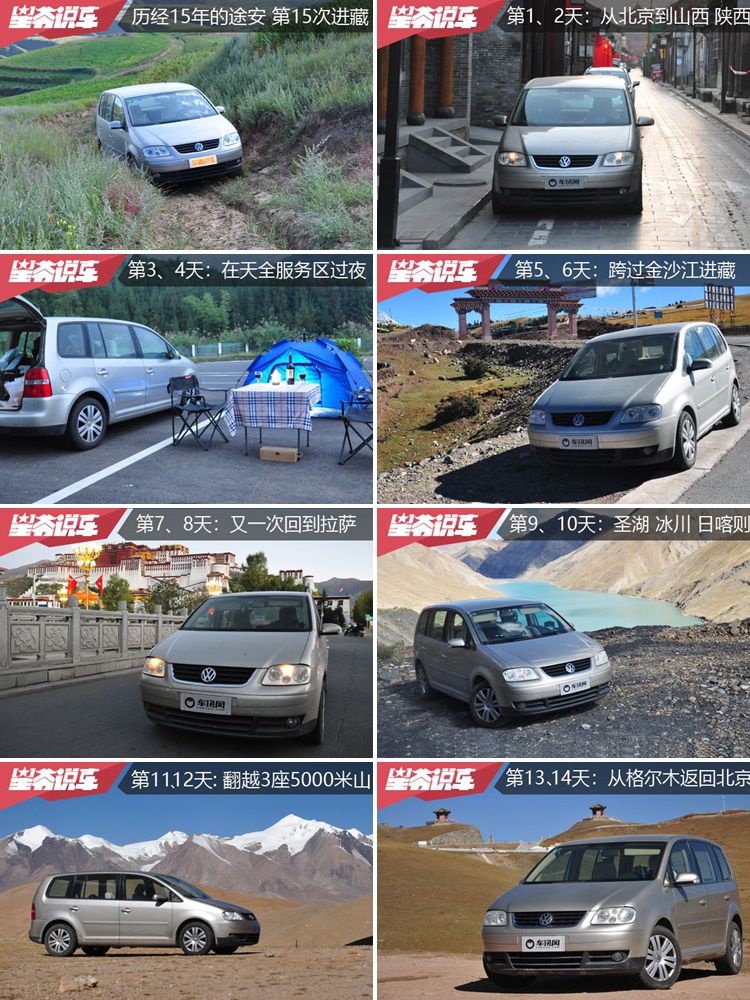
Three years ago, when this Touran was in its 15th year, I drove it and entered Tibet for the 15th time — — 318 in, 109 out, taking a very standard loop. At that time, I wrote eight travel notes. If you are interested, click the picture below to see it.
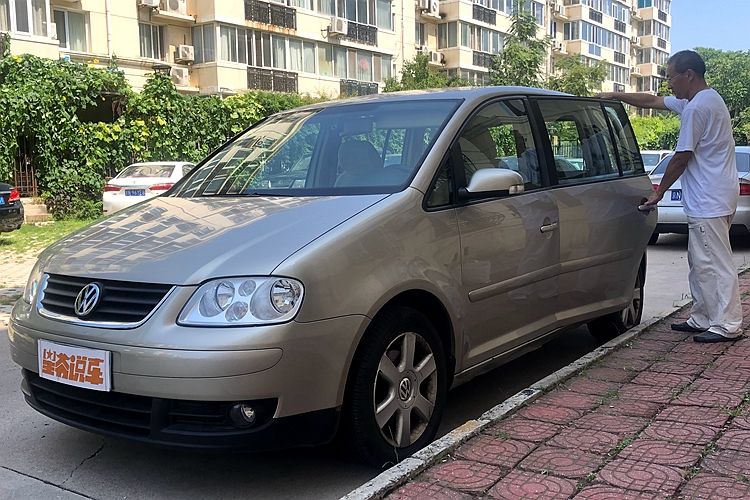
This time, I still drove the Touran — — It was introduced by SAIC Volkswagen in 2005, and it was a multi-purpose vehicle that was not common in China at that time, referred to as MPV. Some people regard this type of car as a commercial car, but it is not. Volkswagen’s commercial car is Maitewei, and Touran is a genuine family car. Its main value lies in its spacious space and variable seats, thus realizing multi-function and being more practical than cars and SUVs.
My Touran has a manual power of 2.0, the maximum power is 85kW, and the horsepower is very ordinary. If it is really full of seven people, the acceleration is somewhat unsatisfactory, but it is more than enough to run in Xizang.
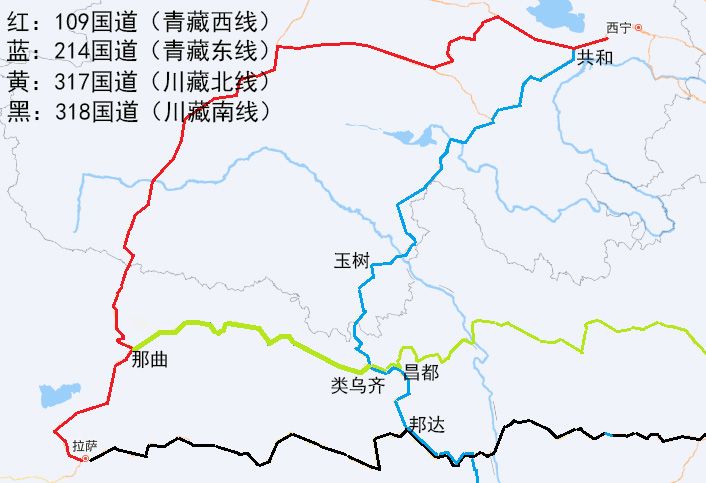
As early as the beginning of the year, I wanted to go to Xizang in May, but it was postponed to August for some reason. The experience of many trips to Tibet tells me that it is very inappropriate to take route 318 in rainy season. In order to avoid possible congestion, I decided to avoid the Sichuan-Tibet line and take the Qinghai-Tibet line: 214 in and 109 out.
The route of National Highway 214 from Qinghai to Xizang is generally the ancient Tang-Fan road that two princesses of the Tang Dynasty once took when they got married, that is, from Datang to Tubo.
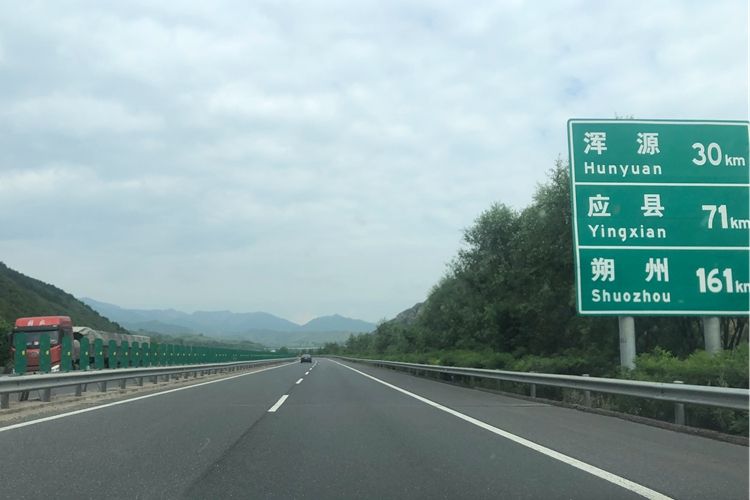
Early in the morning, I left Beijing along the Beijing-Kunming Expressway, passing through Laiyuan, Fanshi, Shenchi, Wuzhai, Shenmu, Yulin, Jingbian and Dingbian, and transferred to the Beijing-Tibet Expressway near Hongsibao. At 9 o’clock in the evening, I entered the Baiyin service area to eat and sleep.
In recent years, I have taken this road relatively more, instead of Beijing-Tibet as I did earlier, because there are few cars on this road.
The next day, when I woke up in the morning, there were several people staying in the service area, and two of them even set up tents next to the car. After eating something, I left the silver service area, and before long, I passed by Lanzhou and went straight to Xining.
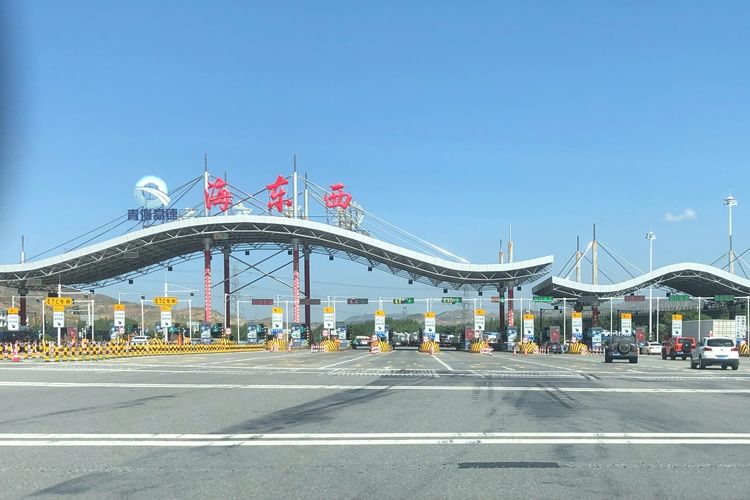
When we arrive in Xining, there is a toll station. The pass card we got when we got on the expressway in Dujiakan, Beijing, is settled here. Interestingly, Qinghai Province has changed to self-service payment. I have a very low dependence on mobile phones, and I basically don’t use mobile phones to surf the Internet. I have to press the call button. The staff came to collect cash and applied for invoicing for me. Although it is more troublesome than paying with one hand and taking tickets with the other, people are polite and have a very good service attitude.
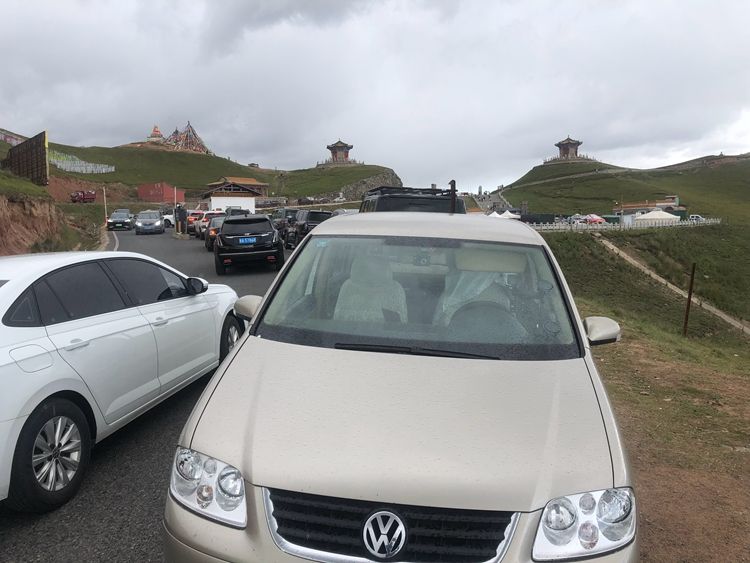
After paying the fee, I was still on the highway, passing through Xining city along the highway, and then rising. When I rose to a little more than 3000 meters, Sun Moon Mountain was in front. During the three years of "mask", I passed by here several times, and almost no one was there. This time, the voices were boiling, and even it was hard to stop.
Behind Sun Moon Mountain is Daotang River, a small town with a fork in the road, where most vehicles go to the right, either to Qinghai Lake or Golmud. I am going straight, leaving National Highway 109 and transferring to National Highway 214.
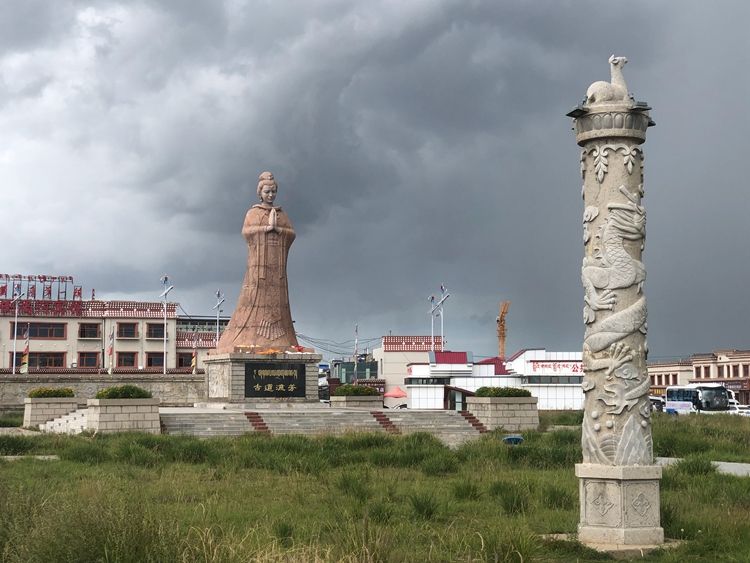
At the intersection, there is a statue of Princess Wencheng. In 641 AD, at the age of 16, she passed through here, along the ancient road of Tangfan, and married to Tubo, today’s Xizang.
After Daotang River, it is not far from the county seat of Gonghe County. Near the county seat is the fork of the expressway. The Beijing-Tibet Expressway continues to the west, and the Xili Expressway goes south to Yushu. I chose the National Highway, which runs in parallel with Xili Expressway, 672 kilometers from Gonghe to Yushu.
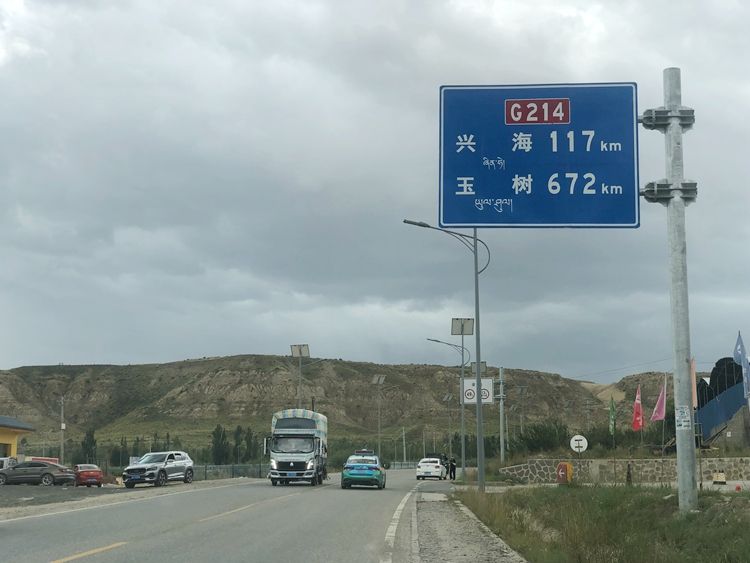
The reason for taking the national highway is that, first, you can stop at any time to enjoy the beautiful scenery; Second, the speed limit of this section of expressway is 80 kilometers, and the speed limit of some sections is 60 kilometers, which is not much faster than the national highway. It is not worthwhile to spend 50 cents on tolls per kilometer.
Starting from Sun Moon Mountain, bid farewell to agricultural areas and enter pastoral areas. Along the way, you can often see scattered nomads.
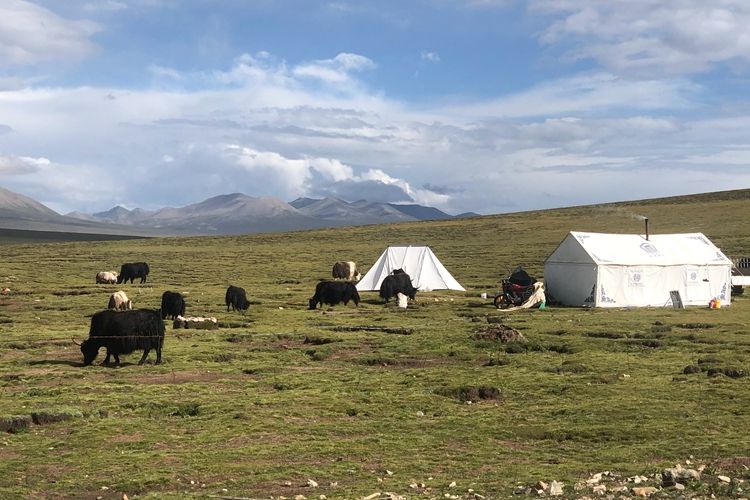
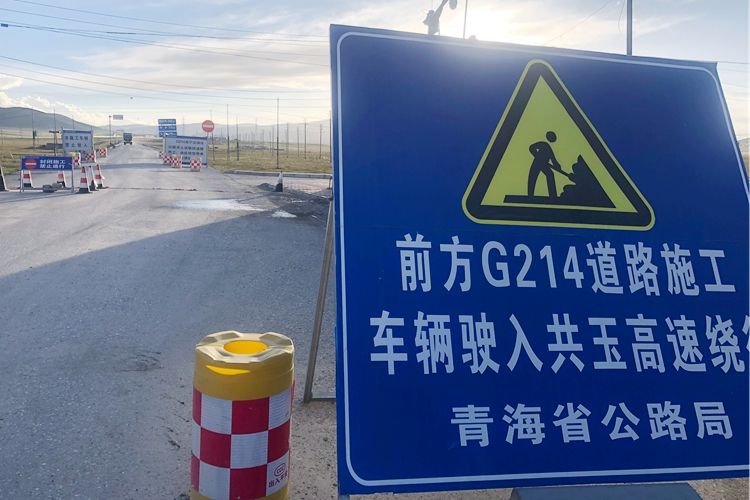
After leaving the Republic, I first turned over a Heka Mountain with an altitude of 3,893 meters, and then turned over an Ela Mountain with an altitude of 4,499 meters, and went to Huashixia Town. The national road was closed and I was forced to take the expressway. After getting on the highway, I was surprised to find that this may be the worst highway I have ever seen — — There are potholes everywhere. In order to protect tires and suspension, we have to slow down. At the lowest, it is only about 30 kilometers.
At 8: 30 in the evening, go to the county seat of maduo county, get off the expressway and stay.
On the third day, I got up in the morning and first turned around in Maduo County. When I first came here, the county seat was extremely humble, and now it is quite modern. When Princess Wencheng entered Tibet, Songzang Ganbu met her in this area and then went to Lhasa together.
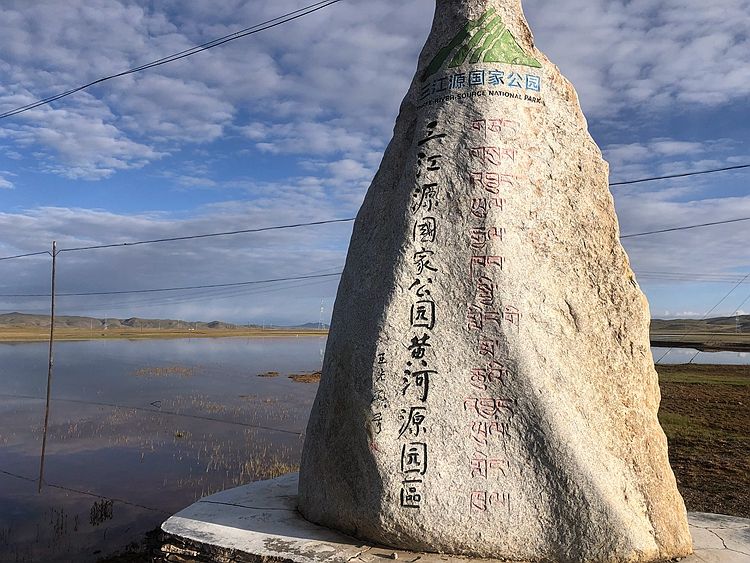
The most famous place in maduo county is Ering Lake, 40km west of the county seat, and there is Zhaling Lake in the past, both of which belong to the headwaters of the Yellow River. When I first went to the lake a few years ago, the lake was surrounded by a no-man’s land, only occasionally I met a Tibetan herder.
Nowadays, it is said that it is out of environmental protection that people are not allowed to go at will. Visitors can only feel it by the Yellow River near the county seat.
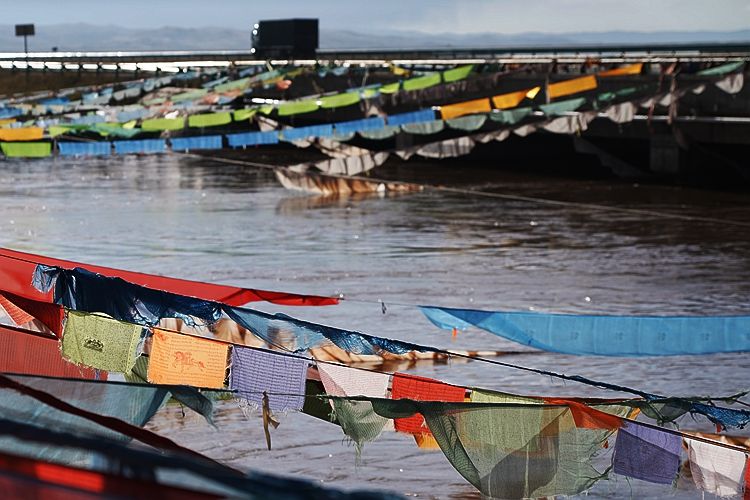
Leave Maduo and continue along the 214 National Road, which is a wilderness all the way. In fact, this is the characteristic of the Qinghai-Tibet line. The first is the plain scenery, and the second is the high altitude. In contrast, the Sichuan-Tibet line, especially the southern Sichuan-Tibet line, has more tourism value. On the one hand, the scenery along the way is changeable, and on the other hand, the altitude is high and low, which is easy to adapt. Unlike the Qinghai-Tibet line, it goes straight to more than 4000 meters as soon as it comes up, and it has been maintained all the time, so it is easy to have altitude sickness.
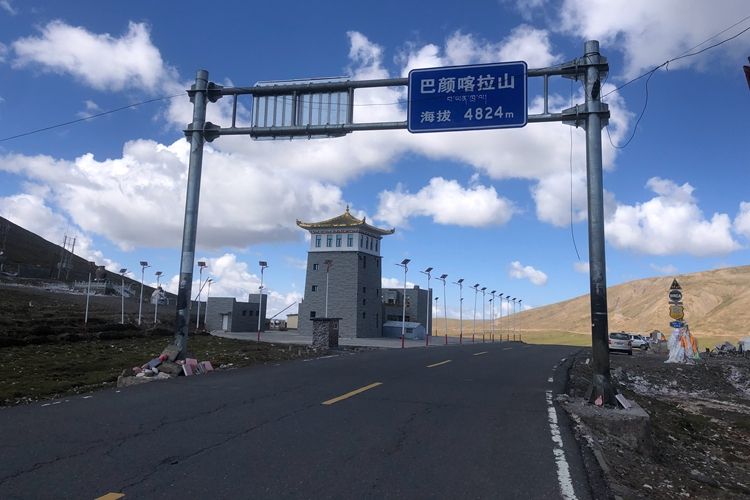
Due to the overall high altitude, several passes on the road, whether 4600 meters or 4800 meters, have no majestic feeling, such as this famous bayan har.
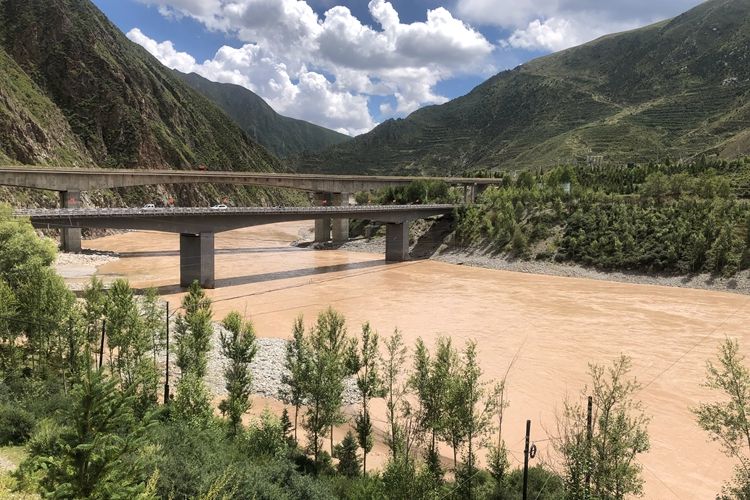
It took 4 hours and 300 kilometers to reach Tongtianhe. At this time, the height has dropped from more than 4,000 meters to 3,000 meters. Tongtian River is the upper reaches of the Yangtze River, and a park has been built along the river. Next to the park, there are three bridges of different ages, the earliest of which has been preserved as history and is not open to traffic.
After crossing the river, I drove 16 kilometers and passed by Dangka Temple, the temple of Karma Kagyu Sect. Unfortunately, it rained cats and dogs, so I didn’t stop. Ten kilometers further, there is a village called Xinzhai. There is a Mani stone pile in the village, and many Tibetans turn around it.
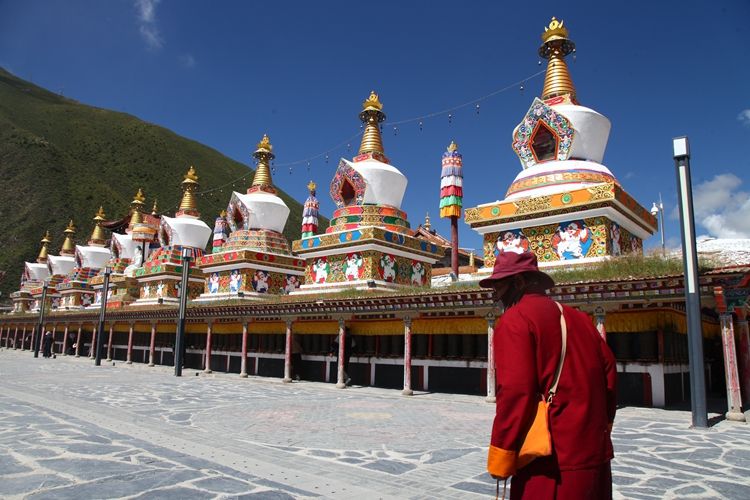
This Mani stone pile is 300-400 meters long from east to west and nearly 100 meters wide from north to south. It is said to be composed of 2.5 billion Mani stones, which was listed in Guinness World Records 20 years ago.
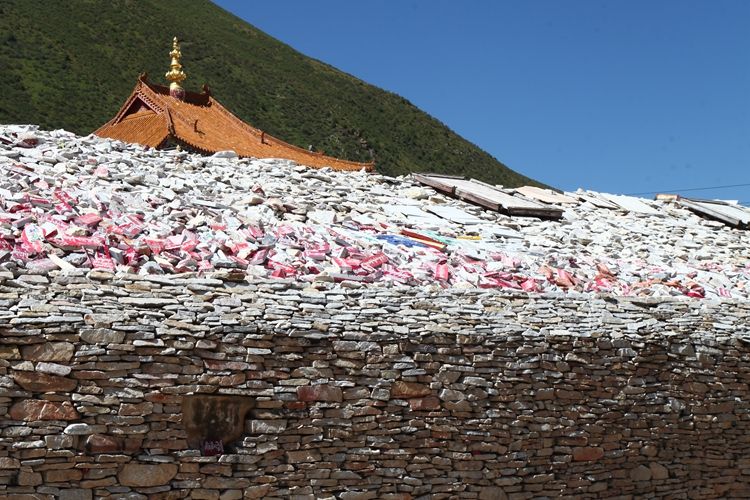
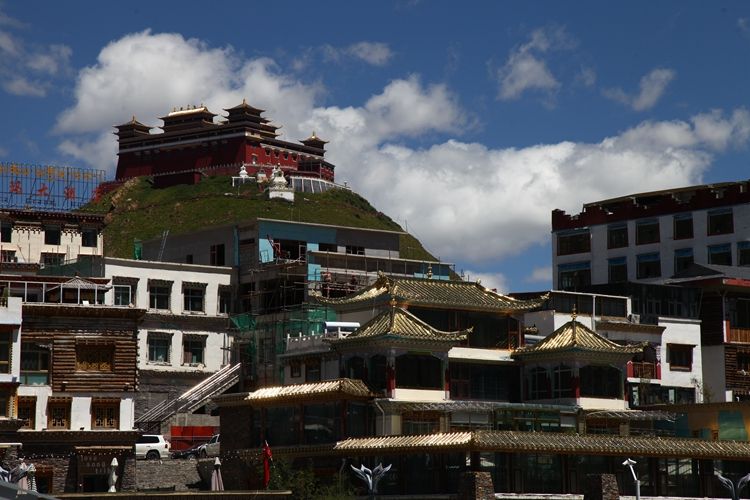
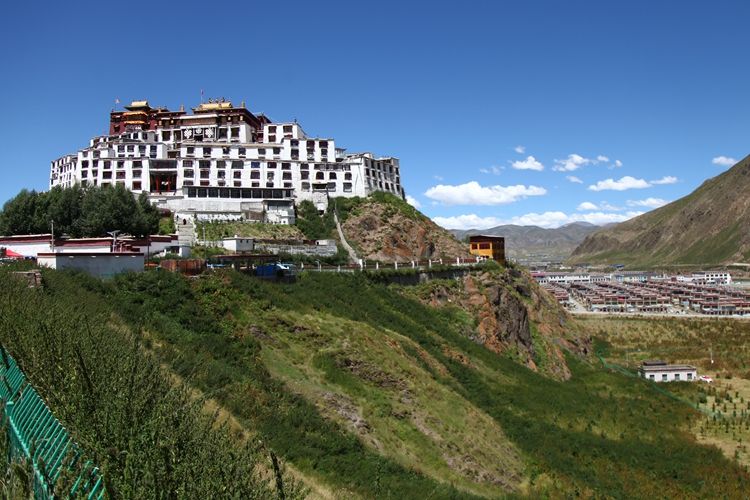
Six kilometers after Xinzhai, it is Yushu City, which used to be called Jiegu Town. There is a mountain in the center of the city, and there is a Jiegu Temple on the mountain, which belongs to the Sakya Sect in Tibetan Buddhism. The building is quite imposing.
There is a spacious platform in front of the temple. Standing here, you can overlook the whole city.
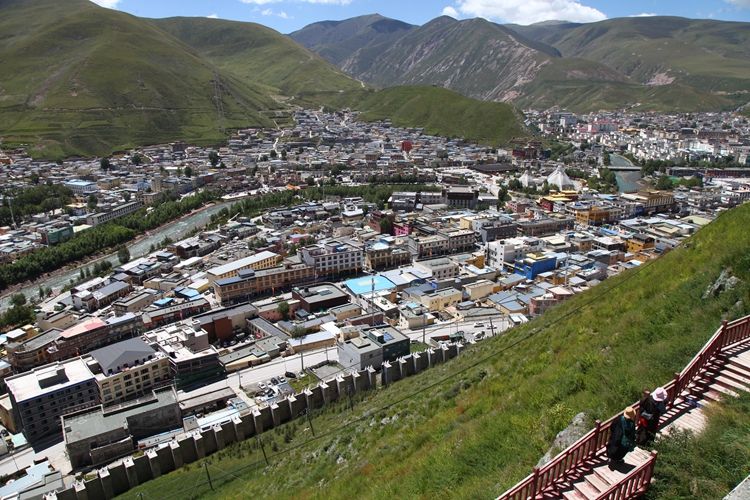
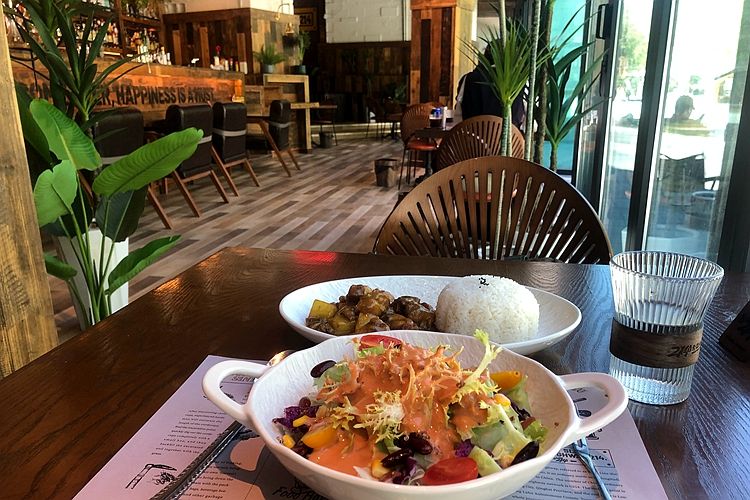
In the center of the city, there are museums and King Gelsall Square. There are many restaurants, cafes and bars along the river on the north side of the square.
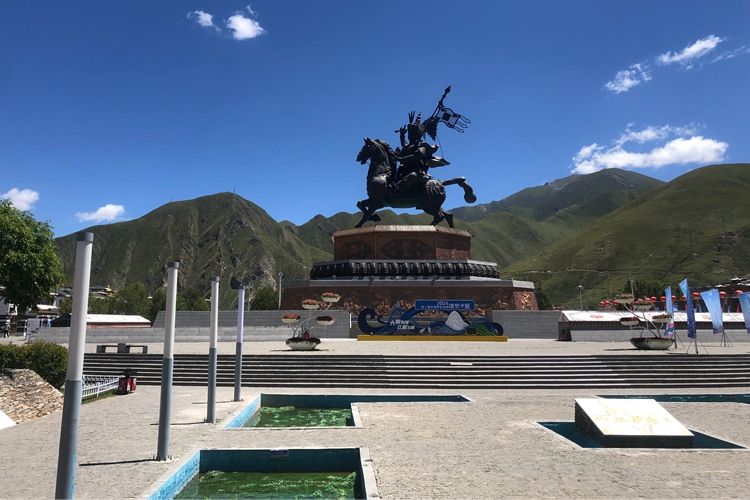
The whole city is clean and tidy, and all facilities, including parking, are friendly to tourists, and it is very convenient to eat, drink, live and travel. I stayed here for one night and stayed for two and a half days. When I left, I still felt a little unfinished.
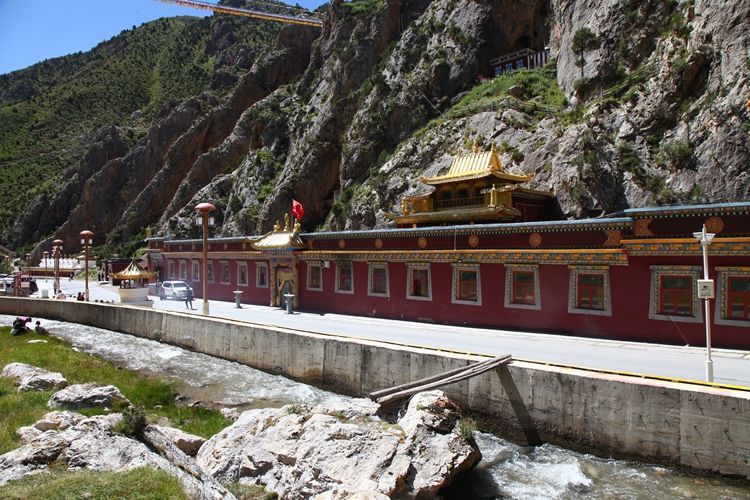
On the fourth day, full of affection for Yushu, I continued along the ancient Tang-Fan Road. 17 kilometers out of the city, in the valley beside the road, there is a Princess Wencheng Temple. It is said that when she passed here, she had a Buddha carved on the rock wall, and when Princess Jincheng entered Tibet, she built a house in front of the Buddha to form protection.
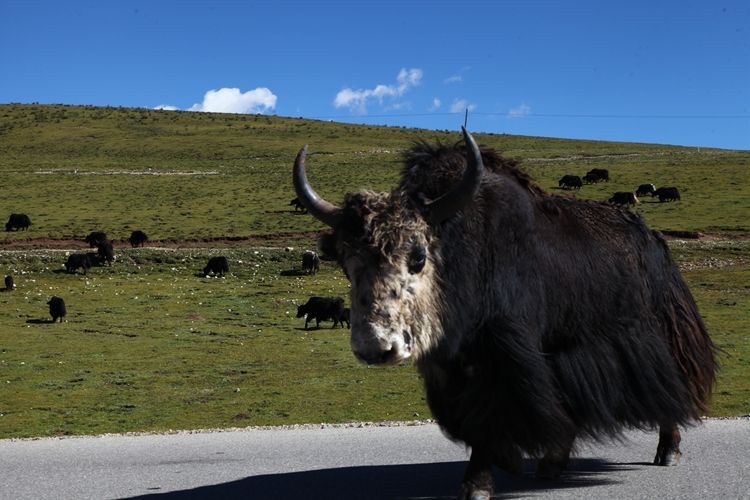
Go further and pass Yushu airport. Along the way, it was mostly grassland, which was very flat. There were not only cattle and sheep, but also many people who set up tents for a picnic. It looked like tourists from Yushu city.
It stands to reason that since you travel along the ancient Tang-Fan Road, you should always go south, pass Nangqian County, and then transfer to National Highway 317 in Leiwuqi County. But I have walked that road several times, and this time I decided to take a road I have never walked — — Go to Zaduo first, and then go from Zaduo to Baqing. It is said that this road can also be counted as the ancient Tang-Fan road. After all, there are several legends about Princess Wencheng’s route to Tibet, which are not unified.
So, in a place called Buluo Village, leave National Highway 214, go straight, head west, and drive to Zaduo County. The scenery on this road is quite good.
After driving for 150 kilometers, it passes through Zaduo County, which is next to the upper reaches of Lancang River — -Zhaqu, known as the first county of Lancang River. The size of the county seat is a bit scary, extending almost 20 kilometers along the national highway. In my impression, it seems that I have never seen such a large county seat.
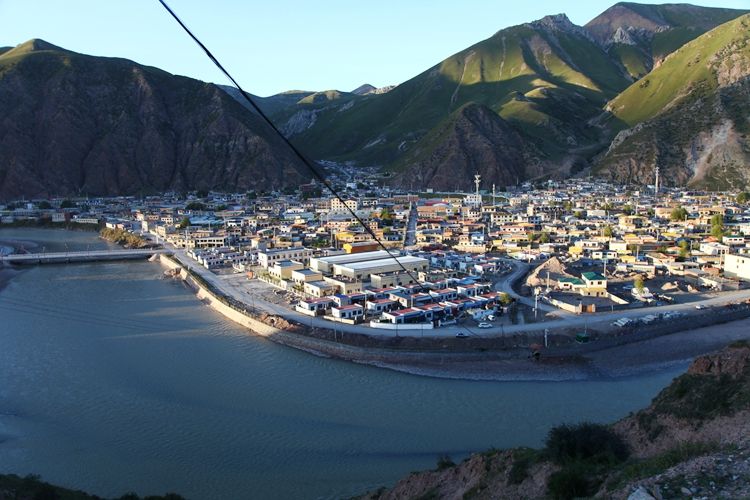
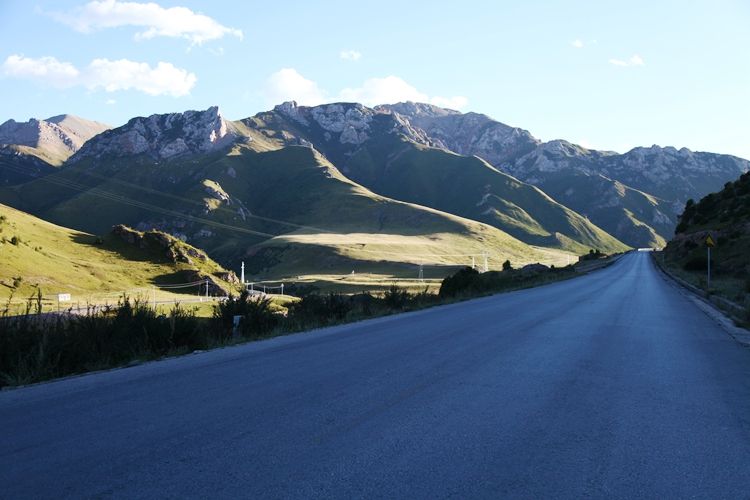
I didn’t stop in Zaduo County. I drove through the city and went on. The following section of the road, with good road conditions, is said to be newly built and seems to have just been opened to traffic. The height continued to rise and soon recovered to more than 4000 meters.
After more than two hours, it was dark. Soon, after passing a road class, there seemed to be no one inside, and there was an open space in front of the door, so I stopped, moved my luggage to the front row, made room for a bed, and got into the sleeping bag. The next morning, I learned that the outside temperature was about 5 degrees below zero. Before leaving, I prepared two sleeping bags, one of which was down, which could cope with 10-20 degrees below zero.
On the fifth day, I got up in the morning, cooked a packet of instant noodles with a steam stove, and went on after eating. Soon, I entered Xizang, but there was no sign of provincial boundaries, only a public security checkpoint.
After entering Tibet, the pavement began to be damaged. Before long, the damage became more and more. The depth of some pits actually reached one-third of the tire, and the edges of the pits were mostly right angles. When I saw it, I had to be careful. In the face of a large number of pits, I could hide if I could. If I couldn’t hide, I would go to a shallower place for fear of scraping the tire or chassis.
In cross-country driving training, there is a bullet hole project, but it is a soil site, and it is not a big problem to knock it, but it is all pits formed by damaged asphalt roads. If it happens to knock the bottom of the engine oil, it will be in trouble — — I once met it in Langya Mountain near Beijing, and the engine oil leaked quickly. I quickly turned around, turned off the engine and taxied for more than 10 kilometers. I came to a flat land and met a village. With the last bit of inertia, I slid my car to the black and white iron processing department in the village, spent 5 yuan on welding, joined the spare gas and left.
At this time, although there are spray guns and spare engine oil in my equipment, if I encounter an accident, I should be able to solve it on my own, but I really don’t want to get off the bus in the face of the dust all over the sky. The environment on this road is too bad, so it is more comfortable to hide in the car. Because of this, I didn’t even take out my camera all morning.
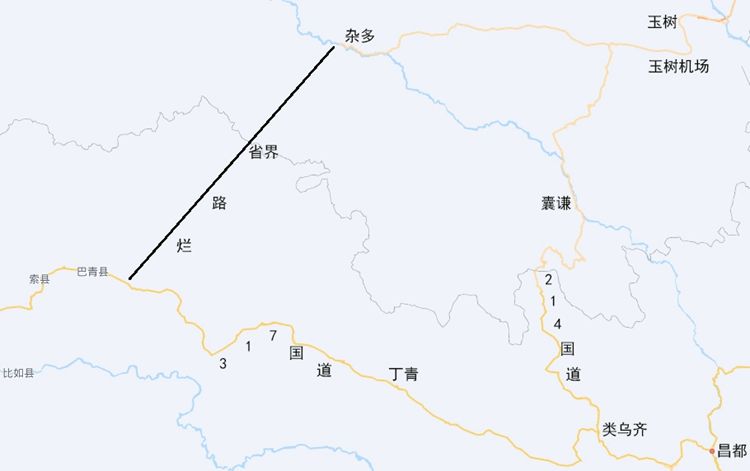
On the severely damaged road section, I walked 90 kilometers in fear and finally came to the 317 National Road. Not far to the west, it is Baqing, and then it is Suoxian. There is a gelug sect monasteries in the county seat, and the building is divided into two parts: the Red Palace and the White House, so it is known as the Little Potala Palace.
Go west for 4 hours along National Highway 317, and come to Naqu, a big city in Xizang. Every time I go back to Beijing after entering Tibet, I will pass by when I take National Highway 109.
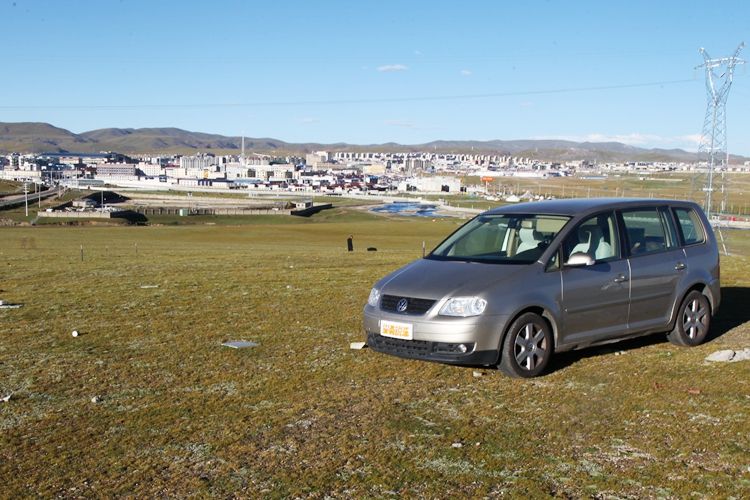
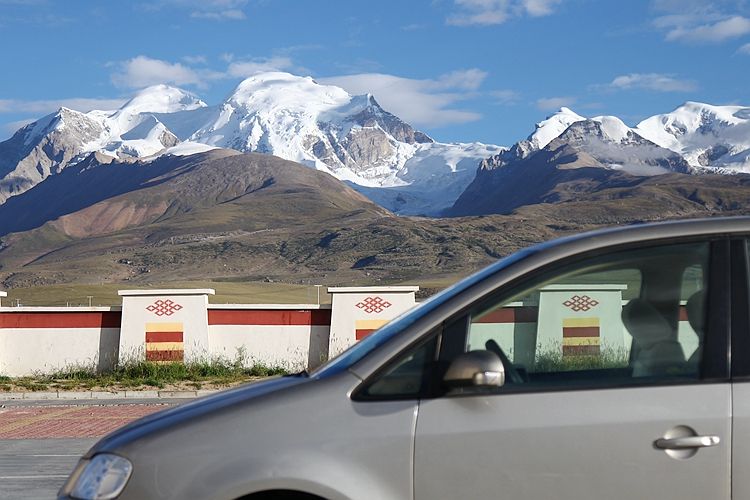
On the sixth day, I left Naqu and arrived in Lhasa in four hours, because there is only 330 kilometers between the two cities and it is an expressway, and it is free. When passing through Nyainqentanglha Peak, an observation deck was built on the expressway, which was quite good.
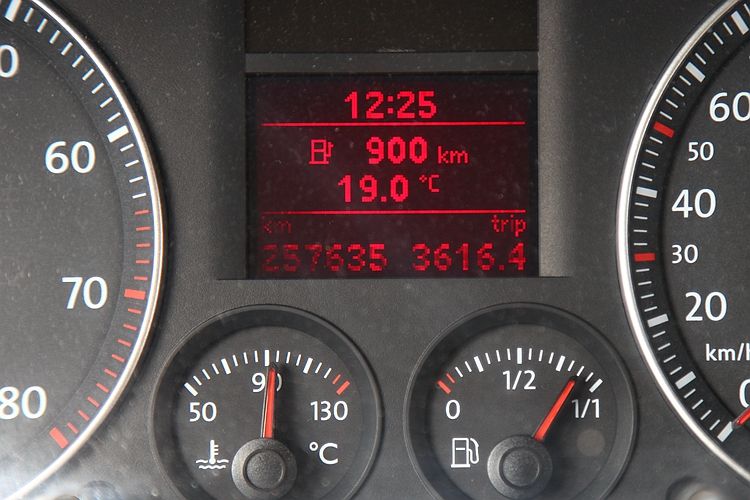
At noon, enter Lhasa city. From home, it is 3616 kilometers to Lhasa. After leaving Beijing, I refueled four times, namely Dingbian, Gonghe, Yushu and Naqu. When I arrived in Lhasa, the fourth tank of oil only consumed 2 small compartments, leaving 900 kilometers of battery life. You may say that this car 18 years ago has a good fuel consumption performance. In fact, even better results are yet to come.
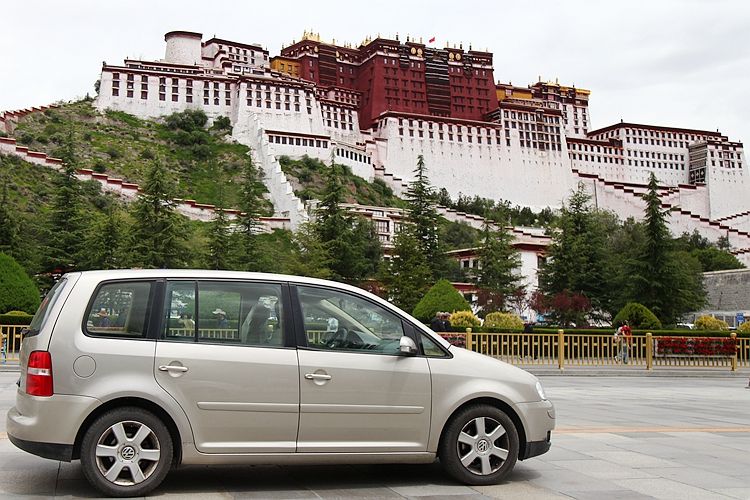
Compared with my first visit to Lhasa many years ago, one of the changes is that the urban area has expanded a lot. Of course, tourists are still concentrated in the Potala Palace, Jokhang Temple and Jokhang Temple.
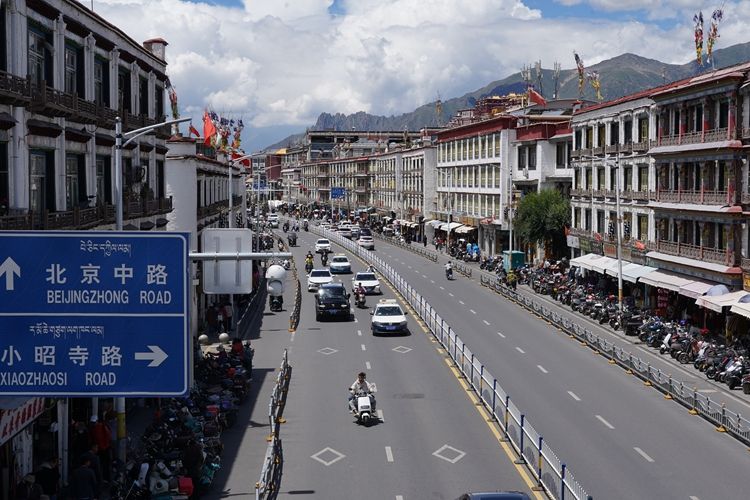
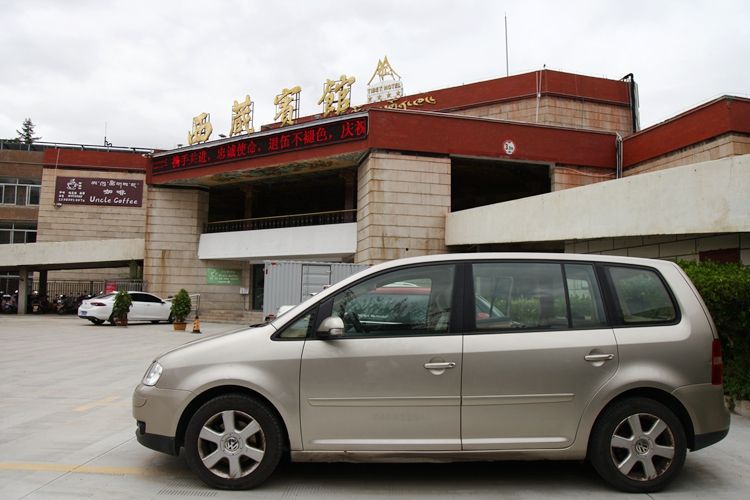
Take me for example, every time I come, I basically stay in the guesthouse or the Eight Lang School, so it is convenient to go out shopping. But I didn’t stay this time, because the guesthouse rose to more than 400 yuan, so I chose the Xizang Hotel with more than 200 yuan. Some people think it is old, but I quite like this old-fashioned hotel. For example, every time I go to Shanghai, I stay in Shanghai Tower, and every time I go to Guangzhou, I stay in Shengli or Huaxia.
I knew about Xizang Hotel when I was a student. It seemed to have just been completed at that time. The China Tourism newspaper also reported that it would place the lobby on the second floor, which would help tourists to climb fewer buildings. After all, flying to Lhasa would inevitably lead to high opposition in the first two days.
Walking to Lhasa, the trip to the ancient Tang-Fan Road was completed. 1400 years ago, when Xizang was in the Tubo period, the 33rd generation of Zampa of this dynasty — — Songzang Gambu moved the capital from Shannan to today’s Lhasa and built the Potala Palace. Ten years later, at the age of 25, he married the 16-year-old Princess Wencheng. The princess came to Lhasa along the ancient Tang-Fan Road and built the Xiaozhao Temple to worship the 12-year-old statue of Sakyamuni brought from Chang ‘an.
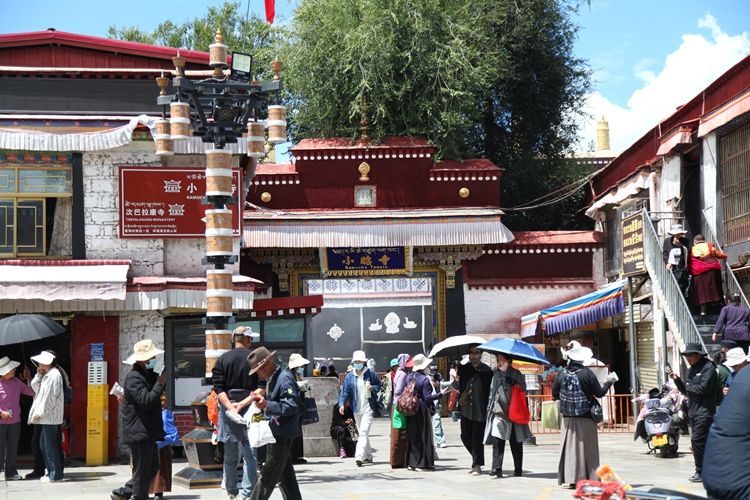
Prior to this, Bhrikuti Devi, which Song Zang Gambu married from Nepal, built Jokhang Temple to worship the 8-year-old statue of Sakyamuni brought from Nepal. Because the Jokhang Temple was built first, the Jokhang Temple was formed around Lhasa City, and it is still the center.
Nowadays, the statues of Sakyamuni at the age of 8 are enshrined in Jokhang Temple, and those at the age of 12 are enshrined in Jokhang Temple. Why do they switch? There are different legends, one of which is the military threat of the Tang Dynasty. I don’t know which legend is closer to the truth, but what I do know is that the Tang Dynasty and Tubo actually had a long war against each other. The Tubo army even invaded the capital Chang ‘an and set up an emperor for the Tang Dynasty.
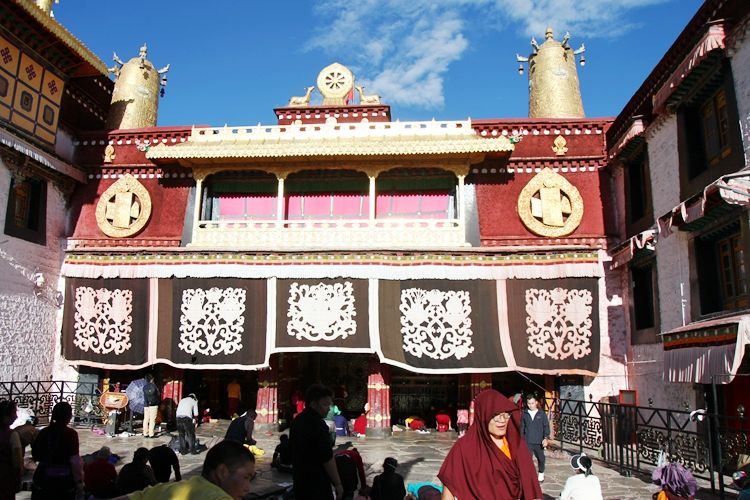
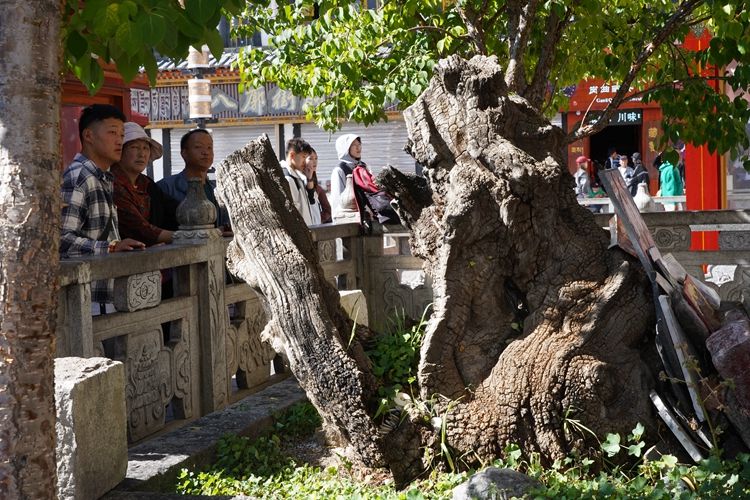
In front of Jokhang Temple, there is a dead willow tree, which is said to have been planted by Princess Wencheng herself. There is a monument next to it, which was established in 823 AD after the Tang Dynasty and Tubo fought intermittently for 200 years.
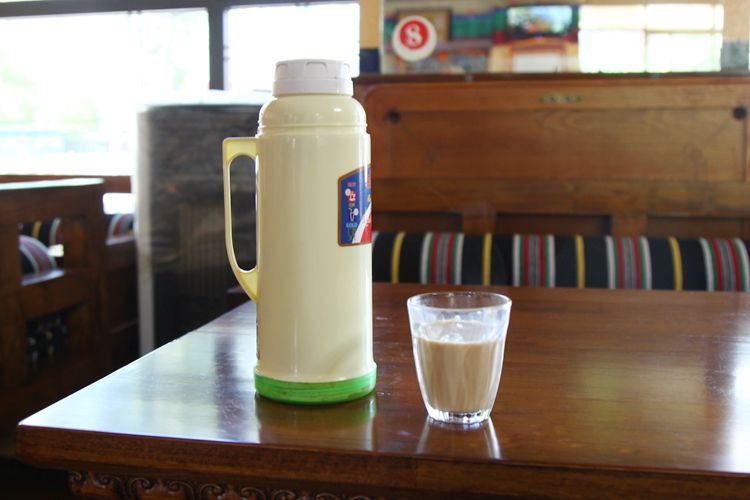
In the next few days, like every time I went to Lhasa, I first walked around Jokhang Temple several times in the morning, and then found a teahouse to drink sweet tea like Tibetans. A pot of 6 yuan can kill most of the day. In the afternoon, find a cafe and then have coffee. That is to say, all day in a daze, nothing else.
In my opinion, the best thing in Lhasa is to be in a daze and do nothing.
Next Travel Notes: Click on the picture below to enter directly and release it on September 18th.
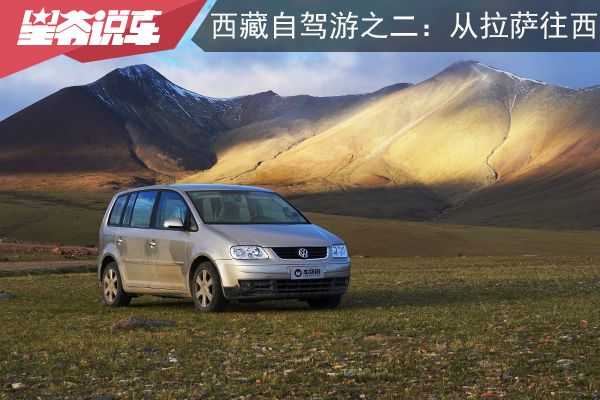
After enjoying a few days in Lhasa, I drove away all the way to the west, passing through Yangzhuo Yongcuo, Karola Glacier, the ancient city of Gyangze and Sakya Temple, and then crossed the Sangmu Ladaban at an altitude of 5,566 meters and the Laqiong Layakou at an altitude of 5,830 meters, especially the latter, which was recognized by the local police as a place only accessible by four-wheel drive off-road vehicles. My 18-year-old Touran, with little horsepower and a forerunner, is still as fast as flying at such a high altitude.